Buy tablegamesonline.com ?
We are moving the project
tablegamesonline.com .
Are you interested in purchasing the domain
tablegamesonline.com ?
domain@kv-gmbh.de · 0541-91531010
Buy tablegamesonline.com ?
How does a photodiode work?
A photodiode is a semiconductor device that converts light into an electrical current. When light strikes the photodiode, it generates electron-hole pairs in the semiconductor material. These pairs create a flow of current, which can be measured as a voltage output. The amount of current produced is directly proportional to the intensity of the light hitting the photodiode. This makes photodiodes useful for applications such as light detection, solar cells, and optical communications. **
How is a photodiode connected?
A photodiode is typically connected in reverse bias configuration, meaning the anode is connected to the negative terminal of the power supply and the cathode is connected to the positive terminal. This allows the photodiode to operate in the photoconductive mode, where it generates a current in response to light exposure. Additionally, a resistor is often connected in series with the photodiode to limit the current and prevent damage to the diode. Finally, the output of the photodiode can be connected to a load or measurement circuit to utilize the generated current. **

Similar search terms for Photodiode
Top-Angebote
Products related to Photodiode:
-
OXFORD UNIVERSITY PRESS Bond Brain Training for Kids Oxford 3 Books Collection Set - Number Puzzles, Logic Puzzles, Word PuzzlesBond Brain Training for Kids Oxford 3 Books Collection Set(michellejoy hughes) Description Bond Brain Training: Number Puzzles Bond Brain Training: Number Puzzles has been designed by Bond, the market leader in 11+ test preparation, to develop children's ability with numbers through problem-solving. The book is packed with number-based puzzles that are broken into Warm-up, Intermediate and Tricky levels, so that children can take on the challenge they feel best suits them. Bond Brain Training: Logic Puzzles Bond Brain Training: Logic Puzzles has been designed by Bond, the market leader in 11+ test preparation, to develop children's ability with logic and reasoning through problem-solving. The book is packed with logic-based puzzles that are broken into Warm-up, Intermediate and Tricky levels, so that children can take on the challenge they feel best suits them. Bond Brain Training: Word Puzzles Bond Brain Training: Word Puzzles has been designed by Bond, the market leader in 11+ test preparation, to develop children's ability with words through problem-solving. The book is packed with word-based puzzles that are broken into Warm-up, Intermediate and Tricky levels, so that children can take on the challenge they feel best suits them.8,89 £*Shipping: 2,99 £Secure redirect to the provider
-
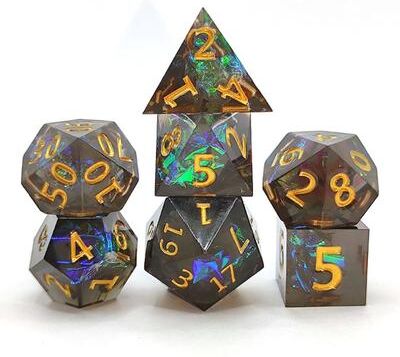
Multisell Products Hub Polyhedral Resin Dice Set, Multicolor Creative Dice Gift, Sharp Corner Dice Polyhedral Resin Dice Set, Multicolor Creative Dice Gift, Sharp Corner DiceEnhance Your Gaming Experience with Creative Resin Dice Set Elevate your gaming sessions with our Creative Resin Resin Dice Set, featuring beautiful polyhedral polyhedral dice that bring vibrant color and sharp edges to your table. This set is...43,97 $*Shipping: 0,00 $Secure redirect to the provider
-
Arcturus 5-Minute Wordsearch (includes ball-point pen): Over 65 Puzzles (5-Minute Puzzles)A fast, fun puzzle collection designed for busy minds who want a quick brain boost anytime, anywhere. Only got 5 minutes? This collection of 120 wordsearch puzzles with a handy ball-point pen is perfect for puzzling on the go. Full of interesting themes, this collection is perfect way to stay entertained, whether you have only have a few minutes to spare or hours to fill! • WITH BALL-POINT PEN: Includes a pen for easy puzzle solving on the go. • EXERCISE YOUR BRAIN: Keep your mind alert by searching for the cunningly hidden words. • REDUCE STRESS: Feel your stress melt away as you focus on these satisfying puzzles.4,99 £*Shipping: 1,99 £Secure redirect to the provider
-
Multisell Products Hub Polyhedral Resin Dice Set, Multicolor Dice, Creative Sharp Corner Dice Gift Collection Polyhedral Resin Dice Set, Multicolor Dice, Creative Sharp Corner Dice Gift CollectionCreative Resin Dice Set for Gamers This Creative Resin Dice Set is the perfect addition to any gamer's collection. Crafted with precision and featuring sharp corner dice designs, this polyhedral dice set offers a vibrant multicolor scheme that...39,97 $*Shipping: 0,00 $Secure redirect to the provider



-
What components does a photodiode need in electrical engineering?
In electrical engineering, a photodiode requires several components to function effectively. These include a semiconductor material, such as silicon, which is sensitive to light and capable of generating an electric current when exposed to photons. Additionally, a photodiode needs a p-n junction to create a depletion region, which allows for the separation of electron-hole pairs when light is absorbed. Furthermore, a photodiode typically requires a reverse bias voltage to create the necessary electric field for efficient operation. Finally, a photodiode may also need a protective housing to shield it from external factors such as temperature, humidity, and mechanical stress. **
-
What is the difference between a diode and a photodiode?
A diode is a two-terminal electronic component that allows current to flow in one direction only. It is commonly used in electronic circuits to control the direction of current flow. On the other hand, a photodiode is a type of diode that is designed to convert light into electrical current. Photodiodes are used in various applications such as light sensors, solar cells, and optical communications. The key difference between a diode and a photodiode is that a photodiode is specifically designed to detect and convert light into electrical current, whereas a diode is a more general electronic component used for controlling current flow. **
-
What is the difference between a photoelement and a photodiode?
A photoelement is a general term used to describe any device that converts light into an electrical signal, including photodiodes. A photodiode is a specific type of photoelement that operates in reverse bias, meaning it only allows current to flow when light is present. Photodiodes are commonly used in applications such as light detection, solar cells, and optical communication systems. In contrast, a photoelement can refer to a broader range of light-sensitive devices, including phototransistors, photoresistors, and photovoltaic cells. **
-
What are the different characteristics between a photodiode and a photoresistor?
Photodiodes are semiconductor devices that generate a current when exposed to light, offering a fast response time and high sensitivity to light intensity changes. They are more expensive and complex to use compared to photoresistors. Photoresistors, on the other hand, are passive components that change resistance based on the amount of light they are exposed to, providing a simple and cost-effective solution for light detection. They have a slower response time and are less sensitive to light compared to photodiodes. **

How can the light sensor (photodiode) be read out analog-digital?
The light sensor (photodiode) can be read out analog-digital by using an analog-to-digital converter (ADC). The photodiode generates a current or voltage signal in response to the incident light, which is then converted into a digital value by the ADC. The ADC samples the analog signal at regular intervals and quantizes it into discrete digital values, which can then be processed and analyzed by a microcontroller or computer. This digital output can be used to measure the intensity of the light and make decisions or trigger actions based on the light level. **
What is the difference between a photodiode, a phototransistor, and a photoresistor?
A photodiode is a semiconductor device that converts light into an electrical current. It operates in reverse bias mode and has a fast response time. A phototransistor is a type of transistor that is sensitive to light and amplifies the current flowing through it when exposed to light. It operates in active mode and is more sensitive than a photodiode. A photoresistor, on the other hand, is a passive component whose resistance changes in response to light intensity. It does not amplify the current like a phototransistor and is commonly used in light sensing applications. **
Top-Angebote
Products related to Photodiode:
-
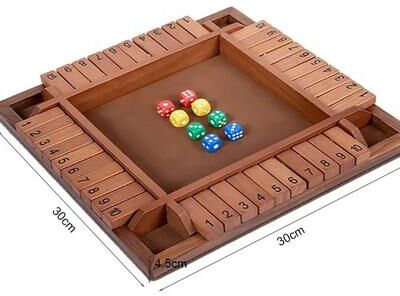
Uplift Essentials Classic Wooden Shut The Box Dice Game 4 Player Strategy Board For Family & Social Gatherings multicolorBring a touch of traditional pubstyle fun to your home with this classic wooden dice game. Designed for up to four players, this dice board game is a fastpaced test of strategy and math that is easy to learn but difficult to master. Crafted from...60,97 $*Shipping: 0,00 $Secure redirect to the provider
-
Uplifted Finds 4 Player Wooden Shut The Box Dice Game Classic Family And Pub Strategy Entertainment style 7 With 8 DicesBring timeless strategy and fastpaced fun to your next gathering with the 4Player Wooden Shut The Box Dice Game. Originally a traditional English pub game, this social favorite has been revamped with four separate number rows so everyone can join...135,97 $*Shipping: 0,00 $Secure redirect to the provider
-
OXFORD UNIVERSITY PRESS Bond Brain Training for Kids Oxford 3 Books Collection Set - Number Puzzles, Logic Puzzles, Word PuzzlesBond Brain Training for Kids Oxford 3 Books Collection Set(michellejoy hughes) Description Bond Brain Training: Number Puzzles Bond Brain Training: Number Puzzles has been designed by Bond, the market leader in 11+ test preparation, to develop children's ability with numbers through problem-solving. The book is packed with number-based puzzles that are broken into Warm-up, Intermediate and Tricky levels, so that children can take on the challenge they feel best suits them. Bond Brain Training: Logic Puzzles Bond Brain Training: Logic Puzzles has been designed by Bond, the market leader in 11+ test preparation, to develop children's ability with logic and reasoning through problem-solving. The book is packed with logic-based puzzles that are broken into Warm-up, Intermediate and Tricky levels, so that children can take on the challenge they feel best suits them. Bond Brain Training: Word Puzzles Bond Brain Training: Word Puzzles has been designed by Bond, the market leader in 11+ test preparation, to develop children's ability with words through problem-solving. The book is packed with word-based puzzles that are broken into Warm-up, Intermediate and Tricky levels, so that children can take on the challenge they feel best suits them.8,89 £*Shipping: 2,99 £Secure redirect to the provider
-
Multisell Products Hub Polyhedral Resin Dice Set, Multicolor Creative Dice Gift, Sharp Corner Dice Polyhedral Resin Dice Set, Multicolor Creative Dice Gift, Sharp Corner DiceEnhance Your Gaming Experience with Creative Resin Dice Set Elevate your gaming sessions with our Creative Resin Resin Dice Set, featuring beautiful polyhedral polyhedral dice that bring vibrant color and sharp edges to your table. This set is...43,97 $*Shipping: 0,00 $Secure redirect to the provider
-
How does a photodiode work?
A photodiode is a semiconductor device that converts light into an electrical current. When light strikes the photodiode, it generates electron-hole pairs in the semiconductor material. These pairs create a flow of current, which can be measured as a voltage output. The amount of current produced is directly proportional to the intensity of the light hitting the photodiode. This makes photodiodes useful for applications such as light detection, solar cells, and optical communications. **
-
How is a photodiode connected?
A photodiode is typically connected in reverse bias configuration, meaning the anode is connected to the negative terminal of the power supply and the cathode is connected to the positive terminal. This allows the photodiode to operate in the photoconductive mode, where it generates a current in response to light exposure. Additionally, a resistor is often connected in series with the photodiode to limit the current and prevent damage to the diode. Finally, the output of the photodiode can be connected to a load or measurement circuit to utilize the generated current. **
-
What components does a photodiode need in electrical engineering?
In electrical engineering, a photodiode requires several components to function effectively. These include a semiconductor material, such as silicon, which is sensitive to light and capable of generating an electric current when exposed to photons. Additionally, a photodiode needs a p-n junction to create a depletion region, which allows for the separation of electron-hole pairs when light is absorbed. Furthermore, a photodiode typically requires a reverse bias voltage to create the necessary electric field for efficient operation. Finally, a photodiode may also need a protective housing to shield it from external factors such as temperature, humidity, and mechanical stress. **
-
What is the difference between a diode and a photodiode?
A diode is a two-terminal electronic component that allows current to flow in one direction only. It is commonly used in electronic circuits to control the direction of current flow. On the other hand, a photodiode is a type of diode that is designed to convert light into electrical current. Photodiodes are used in various applications such as light sensors, solar cells, and optical communications. The key difference between a diode and a photodiode is that a photodiode is specifically designed to detect and convert light into electrical current, whereas a diode is a more general electronic component used for controlling current flow. **
Similar search terms for Photodiode
-
Arcturus 5-Minute Wordsearch (includes ball-point pen): Over 65 Puzzles (5-Minute Puzzles)A fast, fun puzzle collection designed for busy minds who want a quick brain boost anytime, anywhere. Only got 5 minutes? This collection of 120 wordsearch puzzles with a handy ball-point pen is perfect for puzzling on the go. Full of interesting themes, this collection is perfect way to stay entertained, whether you have only have a few minutes to spare or hours to fill! • WITH BALL-POINT PEN: Includes a pen for easy puzzle solving on the go. • EXERCISE YOUR BRAIN: Keep your mind alert by searching for the cunningly hidden words. • REDUCE STRESS: Feel your stress melt away as you focus on these satisfying puzzles.4,99 £*Shipping: 1,99 £Secure redirect to the provider
-
Multisell Products Hub Polyhedral Resin Dice Set, Multicolor Dice, Creative Sharp Corner Dice Gift Collection Polyhedral Resin Dice Set, Multicolor Dice, Creative Sharp Corner Dice Gift CollectionCreative Resin Dice Set for Gamers This Creative Resin Dice Set is the perfect addition to any gamer's collection. Crafted with precision and featuring sharp corner dice designs, this polyhedral dice set offers a vibrant multicolor scheme that...39,97 $*Shipping: 0,00 $Secure redirect to the provider
-
Uplift Picks Magic Dice Trick Changing Number Illusion Dice Magic Prop Magic Dice Trick Changing Number Illusion Dice Magic PropAmaze your friends and audience with this clever magic dice trick that makes numbers change right before their eyes. This fun and easytouse changing dice magic prop is perfect for beginners and seasoned performers alike. Designed for smooth...41,00 $*Shipping: 0,00 $Secure redirect to the provider
-
Uplift Picks Multiplayer Balloon Explosion Game Fun Family Tabletop Party Toy Multiplayer Balloon Explosion Game Fun Family Tabletop Party ToyGet ready for laughter, suspense, and surprise with this exciting balloon explosion game that keeps everyone on edge. Designed as a thrilling family tabletop party game, players take turns adding pressure until the balloon suddenly pops. This...30,98 $*Shipping: 0,00 $Secure redirect to the provider
-
What is the difference between a photoelement and a photodiode?
A photoelement is a general term used to describe any device that converts light into an electrical signal, including photodiodes. A photodiode is a specific type of photoelement that operates in reverse bias, meaning it only allows current to flow when light is present. Photodiodes are commonly used in applications such as light detection, solar cells, and optical communication systems. In contrast, a photoelement can refer to a broader range of light-sensitive devices, including phototransistors, photoresistors, and photovoltaic cells. **
-
What are the different characteristics between a photodiode and a photoresistor?
Photodiodes are semiconductor devices that generate a current when exposed to light, offering a fast response time and high sensitivity to light intensity changes. They are more expensive and complex to use compared to photoresistors. Photoresistors, on the other hand, are passive components that change resistance based on the amount of light they are exposed to, providing a simple and cost-effective solution for light detection. They have a slower response time and are less sensitive to light compared to photodiodes. **
-
How can the light sensor (photodiode) be read out analog-digital?
The light sensor (photodiode) can be read out analog-digital by using an analog-to-digital converter (ADC). The photodiode generates a current or voltage signal in response to the incident light, which is then converted into a digital value by the ADC. The ADC samples the analog signal at regular intervals and quantizes it into discrete digital values, which can then be processed and analyzed by a microcontroller or computer. This digital output can be used to measure the intensity of the light and make decisions or trigger actions based on the light level. **
-
What is the difference between a photodiode, a phototransistor, and a photoresistor?
A photodiode is a semiconductor device that converts light into an electrical current. It operates in reverse bias mode and has a fast response time. A phototransistor is a type of transistor that is sensitive to light and amplifies the current flowing through it when exposed to light. It operates in active mode and is more sensitive than a photodiode. A photoresistor, on the other hand, is a passive component whose resistance changes in response to light intensity. It does not amplify the current like a phototransistor and is commonly used in light sensing applications. **
* All prices are inclusive of VAT and, if applicable, plus shipping costs. The offer information is based on the details provided by the respective shop and is updated through automated processes. Real-time updates do not occur, so deviations can occur in individual cases. ** Note: Parts of this content were created by AI.