Buy tablegamesonline.com ?
We are moving the project
tablegamesonline.com .
Are you interested in purchasing the domain
tablegamesonline.com ?
domain@kv-gmbh.de · 0541-91531010
Buy tablegamesonline.com ?
Cation or anion?
A cation is a positively charged ion, while an anion is a negatively charged ion. Cations are formed when an atom loses electrons, resulting in a net positive charge, while anions are formed when an atom gains electrons, resulting in a net negative charge. The charge of a cation is indicated by a superscript plus sign (+), while the charge of an anion is indicated by a superscript minus sign (-). **
Which anion is formed?
The anion formed is chloride (Cl-). When sodium chloride (NaCl) dissolves in water, it dissociates into sodium cations (Na+) and chloride anions (Cl-). The chloride anion carries a negative charge and is attracted to the positive end of the water molecule, forming a hydrated chloride ion. **


Similar search terms for Anion
Top-Angebote
Products related to Anion:
-
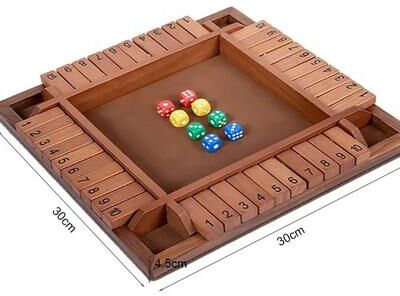
Uplifted Finds 4 Player Wooden Shut The Box Dice Game Classic Family And Pub Strategy Entertainment style 7 With 8 DicesBring timeless strategy and fastpaced fun to your next gathering with the 4Player Wooden Shut The Box Dice Game. Originally a traditional English pub game, this social favorite has been revamped with four separate number rows so everyone can join...135,97 $*Shipping: 0,00 $Secure redirect to the provider
-
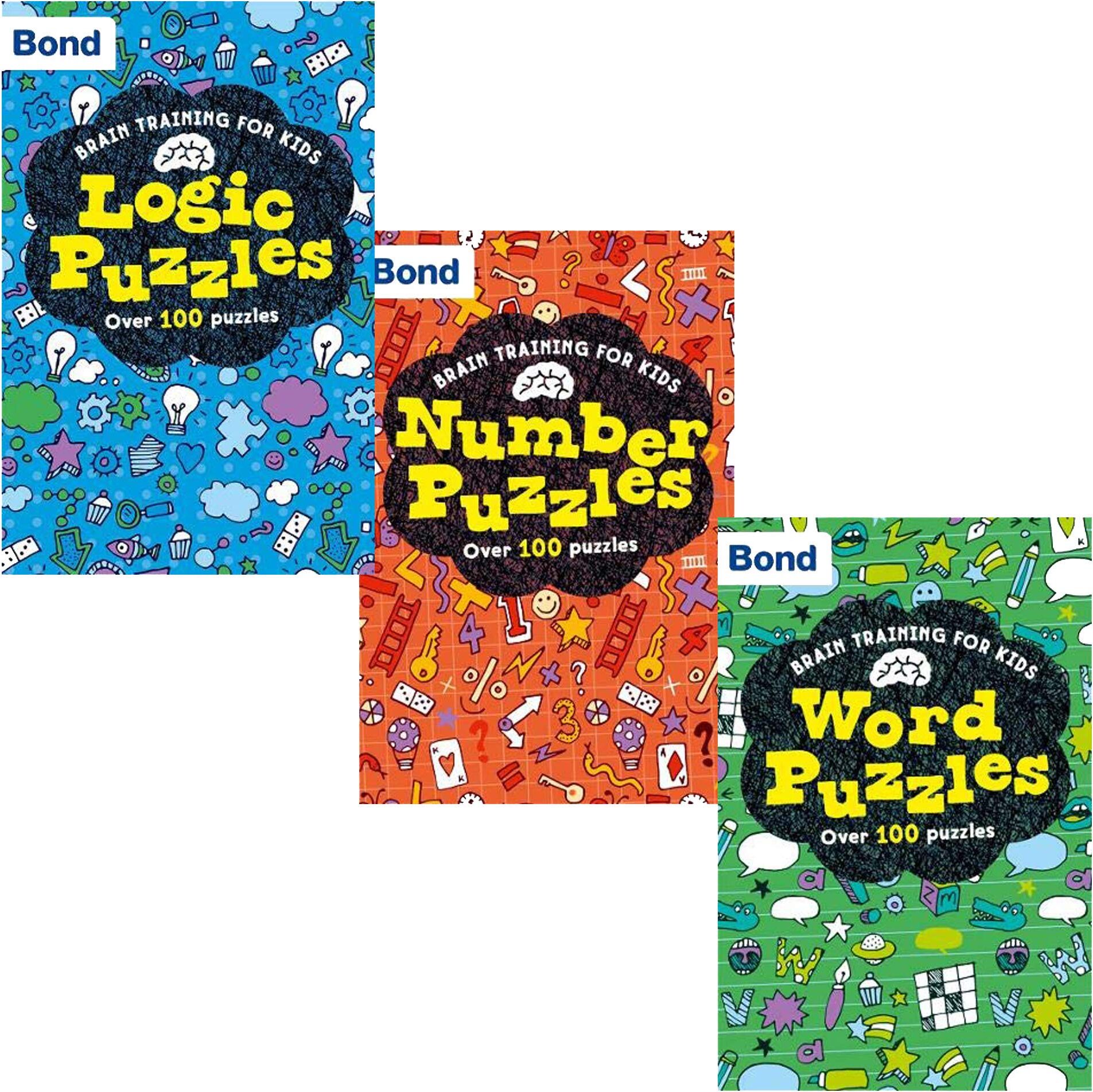
OXFORD UNIVERSITY PRESS Bond Brain Training for Kids Oxford 3 Books Collection Set - Number Puzzles, Logic Puzzles, Word PuzzlesBond Brain Training for Kids Oxford 3 Books Collection Set(michellejoy hughes) Description Bond Brain Training: Number Puzzles Bond Brain Training: Number Puzzles has been designed by Bond, the market leader in 11+ test preparation, to develop children's ability with numbers through problem-solving. The book is packed with number-based puzzles that are broken into Warm-up, Intermediate and Tricky levels, so that children can take on the challenge they feel best suits them. Bond Brain Training: Logic Puzzles Bond Brain Training: Logic Puzzles has been designed by Bond, the market leader in 11+ test preparation, to develop children's ability with logic and reasoning through problem-solving. The book is packed with logic-based puzzles that are broken into Warm-up, Intermediate and Tricky levels, so that children can take on the challenge they feel best suits them. Bond Brain Training: Word Puzzles Bond Brain Training: Word Puzzles has been designed by Bond, the market leader in 11+ test preparation, to develop children's ability with words through problem-solving. The book is packed with word-based puzzles that are broken into Warm-up, Intermediate and Tricky levels, so that children can take on the challenge they feel best suits them.8,89 £*Shipping: 2,99 £Secure redirect to the provider
-
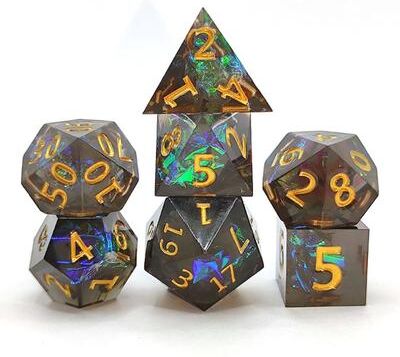
Multisell Products Hub Polyhedral Resin Dice Set, Multicolor Creative Dice Gift, Sharp Corner Dice Polyhedral Resin Dice Set, Multicolor Creative Dice Gift, Sharp Corner DiceEnhance Your Gaming Experience with Creative Resin Dice Set Elevate your gaming sessions with our Creative Resin Resin Dice Set, featuring beautiful polyhedral polyhedral dice that bring vibrant color and sharp edges to your table. This set is...43,97 $*Shipping: 0,00 $Secure redirect to the provider
-
Multisell Products Hub Polyhedral Resin Dice Set, Multicolor Dice, Creative Sharp Corner Dice Gift Collection Polyhedral Resin Dice Set, Multicolor Dice, Creative Sharp Corner Dice Gift CollectionCreative Resin Dice Set for Gamers This Creative Resin Dice Set is the perfect addition to any gamer's collection. Crafted with precision and featuring sharp corner dice designs, this polyhedral dice set offers a vibrant multicolor scheme that...39,97 $*Shipping: 0,00 $Secure redirect to the provider

-
What is the anion of potassium carbonate?
The anion of potassium carbonate is the carbonate ion (CO3^2-). This ion is composed of one carbon atom and three oxygen atoms, and it carries a 2- charge. When combined with a potassium cation (K+), it forms the compound potassium carbonate (K2CO3). **
-
Is the acid conjugate to the anion a weak acid if the anion is a good leaving group?
Yes, if the anion is a good leaving group, then the acid conjugate to the anion is likely to be a weak acid. This is because a good leaving group is typically stable and less likely to hold onto its proton, making the corresponding acid less likely to donate its proton. Therefore, the acid conjugate to the anion would be weak in terms of its ability to donate a proton in a chemical reaction. **
-
How do you distinguish a cation from an anion?
Cations are positively charged ions, while anions are negatively charged ions. Cations are formed when an atom loses one or more electrons, resulting in a net positive charge. Anions are formed when an atom gains one or more electrons, resulting in a net negative charge. One way to distinguish between cations and anions is to observe their behavior in a solution: cations are attracted to the negative electrode (cathode) in electrolysis, while anions are attracted to the positive electrode (anode). Additionally, cations are usually smaller in size than their parent atoms, while anions are larger. **
-
How is the reduction of the dichromate anion carried out?
The reduction of the dichromate anion is typically carried out using a reducing agent such as sulfur dioxide, iron(II) salts, or thiosulfate. These reducing agents donate electrons to the dichromate anion, causing it to be reduced to chromium(III) ions. The reaction is usually carried out in an acidic solution to provide the necessary conditions for the reduction to occur efficiently. **

How is the sodium cation connected to a chloride anion?
The sodium cation is connected to a chloride anion through ionic bonding. In this type of bonding, the sodium atom loses an electron to become a positively charged cation, while the chloride atom gains an electron to become a negatively charged anion. The opposite charges of the sodium cation and chloride anion attract each other, forming a strong bond between the two ions. This ionic bond creates a stable compound known as sodium chloride, or table salt. **
Why is there no KSO4 molecule? Why is it an anion?
There is no KSO4 molecule because potassium (K) is a metal and sulfate (SO4) is a polyatomic ion. When potassium combines with sulfate, it forms the ionic compound potassium sulfate (K2SO4), in which potassium loses an electron to become a positively charged ion (K+) and sulfate gains two electrons to become a negatively charged ion (SO4^2-). This ionic bond between the positively charged potassium ion and the negatively charged sulfate ion results in the formation of an anion rather than a molecule. **
Top-Angebote
Products related to Anion:
-
Villa by Classic Home Anion Linen Blend BlanketAdd effortless comfort and natural texture to your space with this reversible linen-blend blanket. Crafted with a beautifully textured slub weave, it delivers a relaxed, organic look and a soft, breathable feel perfect for year-round use.226,49 $*Shipping: 0,00 $Secure redirect to the provider
-
Uplift Essentials Classic Wooden Shut The Box Dice Game 4 Player Strategy Board For Family & Social Gatherings multicolorBring a touch of traditional pubstyle fun to your home with this classic wooden dice game. Designed for up to four players, this dice board game is a fastpaced test of strategy and math that is easy to learn but difficult to master. Crafted from...60,97 $*Shipping: 0,00 $Secure redirect to the provider
-
Uplifted Finds 4 Player Wooden Shut The Box Dice Game Classic Family And Pub Strategy Entertainment style 7 With 8 DicesBring timeless strategy and fastpaced fun to your next gathering with the 4Player Wooden Shut The Box Dice Game. Originally a traditional English pub game, this social favorite has been revamped with four separate number rows so everyone can join...135,97 $*Shipping: 0,00 $Secure redirect to the provider
-
OXFORD UNIVERSITY PRESS Bond Brain Training for Kids Oxford 3 Books Collection Set - Number Puzzles, Logic Puzzles, Word PuzzlesBond Brain Training for Kids Oxford 3 Books Collection Set(michellejoy hughes) Description Bond Brain Training: Number Puzzles Bond Brain Training: Number Puzzles has been designed by Bond, the market leader in 11+ test preparation, to develop children's ability with numbers through problem-solving. The book is packed with number-based puzzles that are broken into Warm-up, Intermediate and Tricky levels, so that children can take on the challenge they feel best suits them. Bond Brain Training: Logic Puzzles Bond Brain Training: Logic Puzzles has been designed by Bond, the market leader in 11+ test preparation, to develop children's ability with logic and reasoning through problem-solving. The book is packed with logic-based puzzles that are broken into Warm-up, Intermediate and Tricky levels, so that children can take on the challenge they feel best suits them. Bond Brain Training: Word Puzzles Bond Brain Training: Word Puzzles has been designed by Bond, the market leader in 11+ test preparation, to develop children's ability with words through problem-solving. The book is packed with word-based puzzles that are broken into Warm-up, Intermediate and Tricky levels, so that children can take on the challenge they feel best suits them.8,89 £*Shipping: 2,99 £Secure redirect to the provider
-
Cation or anion?
A cation is a positively charged ion, while an anion is a negatively charged ion. Cations are formed when an atom loses electrons, resulting in a net positive charge, while anions are formed when an atom gains electrons, resulting in a net negative charge. The charge of a cation is indicated by a superscript plus sign (+), while the charge of an anion is indicated by a superscript minus sign (-). **
-
Which anion is formed?
The anion formed is chloride (Cl-). When sodium chloride (NaCl) dissolves in water, it dissociates into sodium cations (Na+) and chloride anions (Cl-). The chloride anion carries a negative charge and is attracted to the positive end of the water molecule, forming a hydrated chloride ion. **
-
What is the anion of potassium carbonate?
The anion of potassium carbonate is the carbonate ion (CO3^2-). This ion is composed of one carbon atom and three oxygen atoms, and it carries a 2- charge. When combined with a potassium cation (K+), it forms the compound potassium carbonate (K2CO3). **
-
Is the acid conjugate to the anion a weak acid if the anion is a good leaving group?
Yes, if the anion is a good leaving group, then the acid conjugate to the anion is likely to be a weak acid. This is because a good leaving group is typically stable and less likely to hold onto its proton, making the corresponding acid less likely to donate its proton. Therefore, the acid conjugate to the anion would be weak in terms of its ability to donate a proton in a chemical reaction. **
Similar search terms for Anion
-
Multisell Products Hub Polyhedral Resin Dice Set, Multicolor Creative Dice Gift, Sharp Corner Dice Polyhedral Resin Dice Set, Multicolor Creative Dice Gift, Sharp Corner DiceEnhance Your Gaming Experience with Creative Resin Dice Set Elevate your gaming sessions with our Creative Resin Resin Dice Set, featuring beautiful polyhedral polyhedral dice that bring vibrant color and sharp edges to your table. This set is...43,97 $*Shipping: 0,00 $Secure redirect to the provider
-
Multisell Products Hub Polyhedral Resin Dice Set, Multicolor Dice, Creative Sharp Corner Dice Gift Collection Polyhedral Resin Dice Set, Multicolor Dice, Creative Sharp Corner Dice Gift CollectionCreative Resin Dice Set for Gamers This Creative Resin Dice Set is the perfect addition to any gamer's collection. Crafted with precision and featuring sharp corner dice designs, this polyhedral dice set offers a vibrant multicolor scheme that...39,97 $*Shipping: 0,00 $Secure redirect to the provider
-
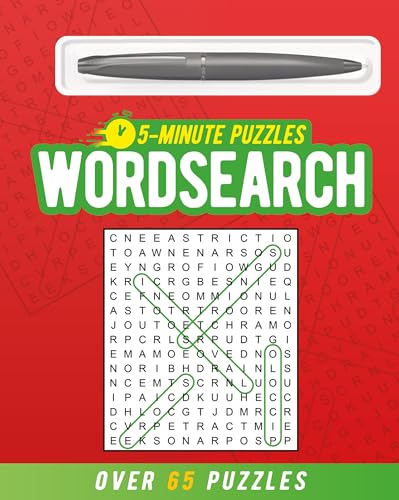
Arcturus 5-Minute Wordsearch (includes ball-point pen): Over 65 Puzzles (5-Minute Puzzles)A fast, fun puzzle collection designed for busy minds who want a quick brain boost anytime, anywhere. Only got 5 minutes? This collection of 120 wordsearch puzzles with a handy ball-point pen is perfect for puzzling on the go. Full of interesting themes, this collection is perfect way to stay entertained, whether you have only have a few minutes to spare or hours to fill! • WITH BALL-POINT PEN: Includes a pen for easy puzzle solving on the go. • EXERCISE YOUR BRAIN: Keep your mind alert by searching for the cunningly hidden words. • REDUCE STRESS: Feel your stress melt away as you focus on these satisfying puzzles.4,99 £*Shipping: 1,99 £Secure redirect to the provider
-
Villa by Classic Home Anion Linen Blend BlanketAdd effortless comfort and natural texture to your space with this reversible linen-blend blanket. Crafted with a beautifully textured slub weave, it delivers a relaxed, organic look and a soft, breathable feel perfect for year-round use.233,49 $*Shipping: 0,00 $Secure redirect to the provider
-
How do you distinguish a cation from an anion?
Cations are positively charged ions, while anions are negatively charged ions. Cations are formed when an atom loses one or more electrons, resulting in a net positive charge. Anions are formed when an atom gains one or more electrons, resulting in a net negative charge. One way to distinguish between cations and anions is to observe their behavior in a solution: cations are attracted to the negative electrode (cathode) in electrolysis, while anions are attracted to the positive electrode (anode). Additionally, cations are usually smaller in size than their parent atoms, while anions are larger. **
-
How is the reduction of the dichromate anion carried out?
The reduction of the dichromate anion is typically carried out using a reducing agent such as sulfur dioxide, iron(II) salts, or thiosulfate. These reducing agents donate electrons to the dichromate anion, causing it to be reduced to chromium(III) ions. The reaction is usually carried out in an acidic solution to provide the necessary conditions for the reduction to occur efficiently. **
-
How is the sodium cation connected to a chloride anion?
The sodium cation is connected to a chloride anion through ionic bonding. In this type of bonding, the sodium atom loses an electron to become a positively charged cation, while the chloride atom gains an electron to become a negatively charged anion. The opposite charges of the sodium cation and chloride anion attract each other, forming a strong bond between the two ions. This ionic bond creates a stable compound known as sodium chloride, or table salt. **
-
Why is there no KSO4 molecule? Why is it an anion?
There is no KSO4 molecule because potassium (K) is a metal and sulfate (SO4) is a polyatomic ion. When potassium combines with sulfate, it forms the ionic compound potassium sulfate (K2SO4), in which potassium loses an electron to become a positively charged ion (K+) and sulfate gains two electrons to become a negatively charged ion (SO4^2-). This ionic bond between the positively charged potassium ion and the negatively charged sulfate ion results in the formation of an anion rather than a molecule. **
* All prices are inclusive of VAT and, if applicable, plus shipping costs. The offer information is based on the details provided by the respective shop and is updated through automated processes. Real-time updates do not occur, so deviations can occur in individual cases. ** Note: Parts of this content were created by AI.